What It Costs to Own an Apartment in Turkey in 2026: Taxes, Aidat, Insurance and Utilities
All the recurring costs of owning a home in Turkey: property tax, the valuable housing tax, DASK, aidat, utilities, and taxes when renting out or selling. With 2026 figures.
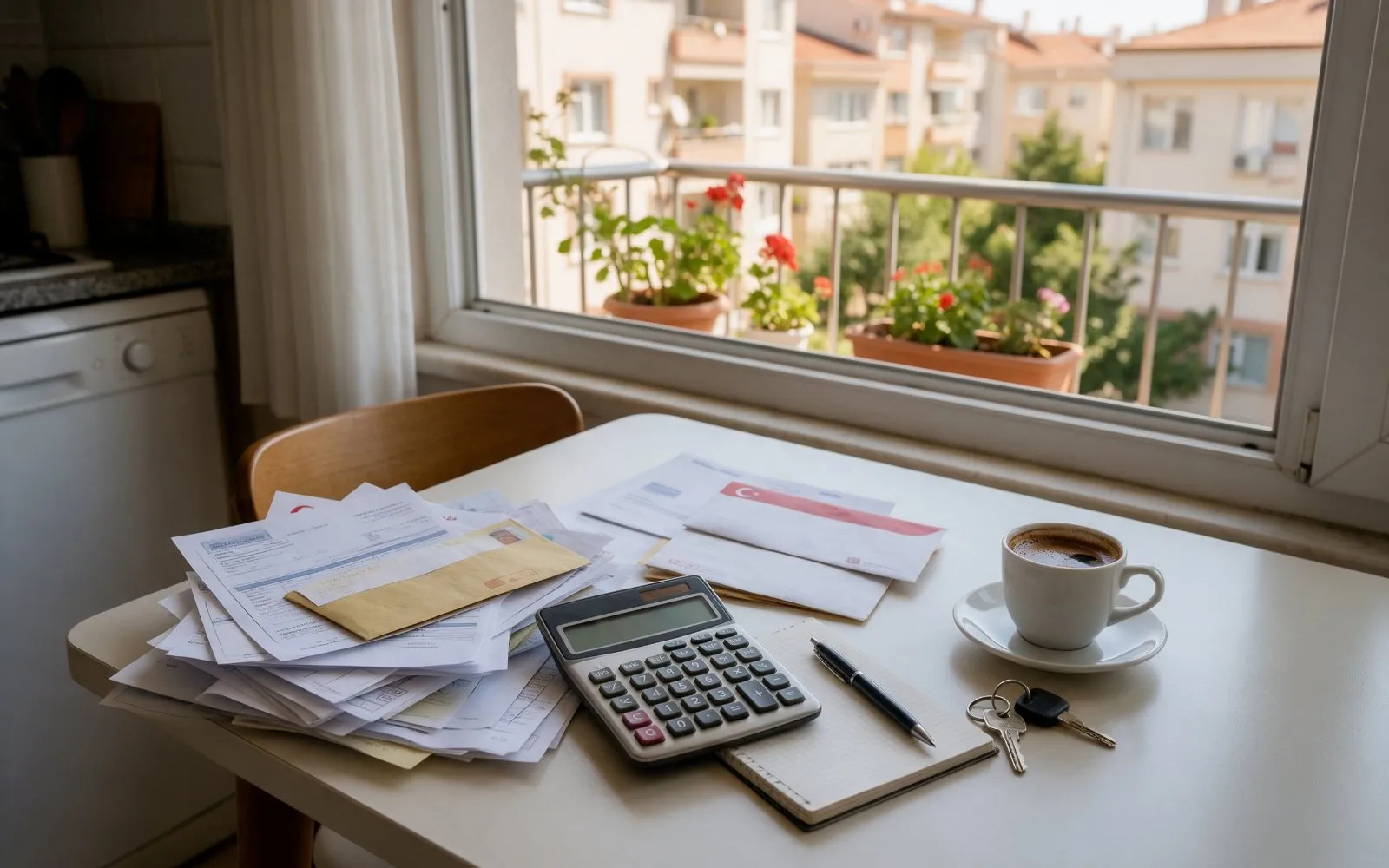
Buying an apartment in Turkey is only half the job. Then come the recurring costs buyers often forget about: property tax, the complex maintenance fee, insurance and utilities. If the apartment is rented out or sold, income taxes are added.
The good news: compared with many European countries, owning a home in Turkey is inexpensive. The bad news: the amounts in lira rise every year with inflation. Below are all the cost items with 2026 figures.
Property tax (emlak vergisi)
All owners pay it, including foreigners. The taxpayer is whoever owned the apartment on 1 January.
Rate for housing: 0.1% a year, or 0.2% in metropolitan provinces (büyükşehir), which include Istanbul, Antalya together with Alanya, Izmir, Mersin and Muğla.
Tax base: not the market price but the tax value (bina vergi değeri), which the municipality calculates using its own unit values. It is usually well below market value.
Growth cap in 2026: the tax base cannot be more than double the previous year's.
Deadlines: in two installments, the first from March to May and the second from September to November.
Example. If an apartment in Antalya has a tax value of 2 million lira, the annual tax is 0.2%, or 4,000 lira, paid in two installments of 2,000.
Property tax in Turkey is one of the smallest cost items. Far more usually goes on aidat and utilities.
Valuable housing tax (değerli konut vergisi)
This is a separate tax for owners of very expensive apartments and houses. In 2026 it applies to homes with a tax value above 17,711,000 lira. Rates range from 0.3% to 1% on a progressive scale, and the return is due by 20 February. Most apartments are not affected, but owners of villas in Bodrum or homes on the Bosphorus should keep it in mind.
DASK: compulsory earthquake insurance
A DASK policy is mandatory for homes in Turkey. Without it you can't transfer electricity and water or complete a deal at the land registry. The policy lasts a year, and you have to renew it yourself.
the maximum sum insured in 2026 is 2,095,462 lira;
the cost depends on the seismic zone, the area and the type of building;
minimum premiums in 2026 range from 505 to 1,951 lira a year depending on the risk zone.
DASK only covers earthquake damage to the building itself. It doesn't cover furniture, appliances, fire, flooding a neighbor or theft — that's what voluntary home insurance (konut sigortası) is for.
Aidat: the building maintenance fee
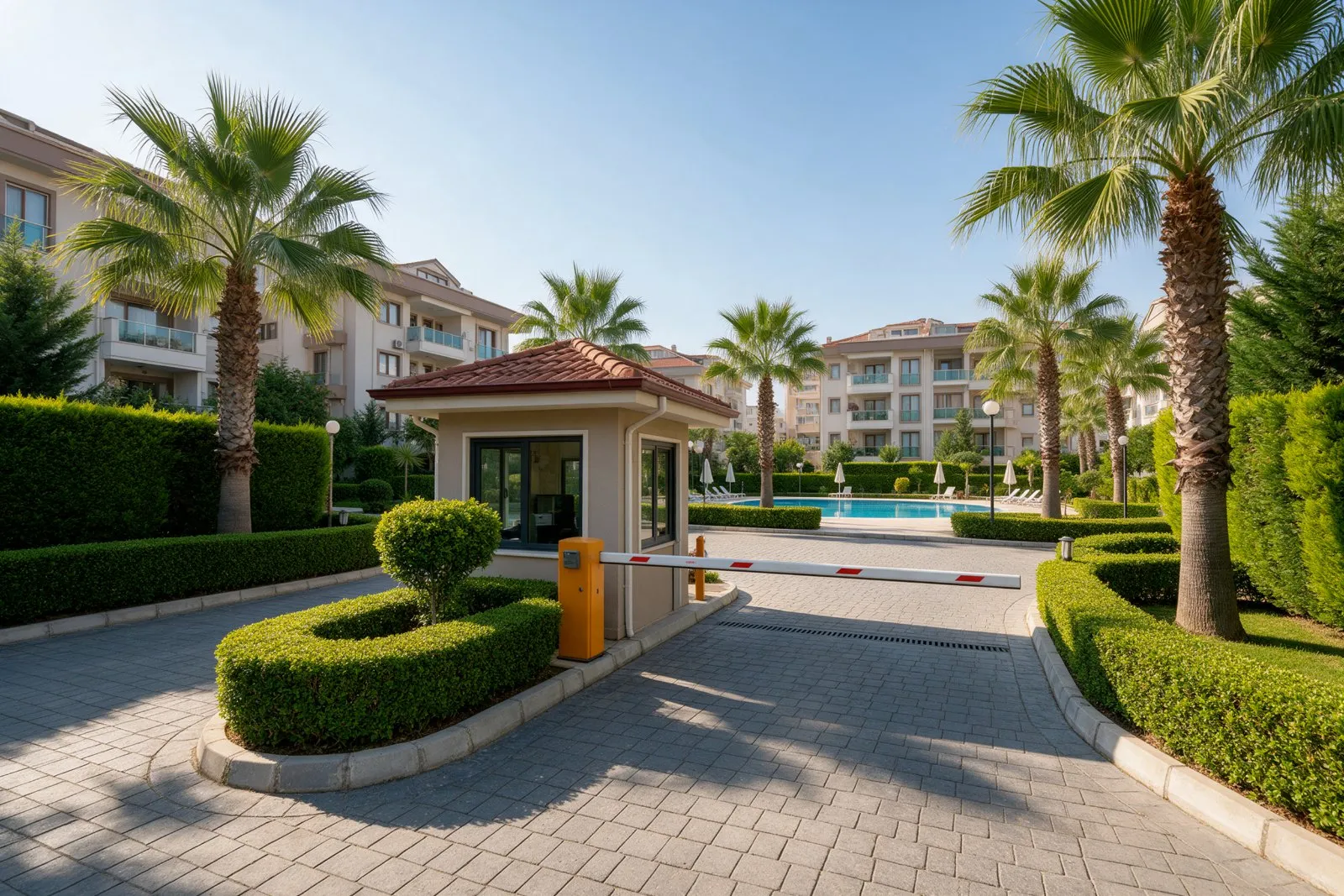
All the flat owners in a building or complex pay aidat. It covers cleaning, security, lifts, lighting, the pool, the garden, the management company and a reserve fund for repairs.
in an ordinary building without a pool or security, aidat is small;
in a complex with a pool, gym, 24-hour security and gardens, it can be several times higher;
the amount is approved by the general meeting of owners, usually once a year.
Before buying, be sure to ask how much the aidat is now, how it changed over the last year and whether the seller has any debts. Under Turkish law unpaid aidat is secured by the apartment itself, so the new owner may end up dealing with it.
Utilities
Electricity is the main expense on the coast: in summer air conditioners run almost round the clock, and in winter they heat the apartment.
Water is billed by the municipal water utility.
Natural gas is far from available in every building on the coast, but it is common in Istanbul and other big cities.
Internet plans are usually cheaper with a 12–24 month contract.
When you first connect, providers take a security deposit (güvence bedeli), refunded when you close the contract. If you don't live in the apartment full-time, have bills sent to your email or an app: late utility payments incur penalties.
If you rent the apartment out
Income from long-term residential rentals is subject to income tax. In 2026 there is an exemption: the first 58,000 lira of annual residential rental income is tax-free if the conditions are met — for example, the return is filed on time and you have no other income that must be declared. Above that amount, tax is calculated on a progressive scale from 15% to 40%. You can deduct documented expenses or take a flat 15% deduction.
The return for 2026 is filed in March 2027. Rules may differ for non-residents of Turkey, so check with an accountant. Tourist rentals are taxed differently, as business income. More on that in our article on short-term rentals in Turkey.
If you sell the apartment
If five years or more have passed since the purchase, there is no capital gains tax.
If less than five years, the gain is taxed. In 2026, 150,000 lira is deducted from it, and the purchase price is indexed for inflation if producer prices rose by more than 10% over the period.
The remaining gain is taxed on a scale from 15% to 40%, with the return filed in March of the following year.
The seller also pays their half of the title deed tax, 2% of the price, unless the parties agree otherwise.
The owner's payment calendar
Every month: aidat and utility bills.
By 20 February: the valuable housing tax return, if it applies to you.
March: the return for rental income and for the sale of an apartment in the previous year.
March to May: the first property tax installment.
September to November: the second property tax installment.
Once a year: renewing DASK by the policy's expiry date.
How to save
Look at the aidat before you buy: the difference between complexes can be several-fold.
Choose apartments with good insulation and inverter air conditioners — your electricity bills will be lower.
Pay property tax on time: late payments incur penalties.
If you rent the apartment out, keep expense records and file your return on time so you don't lose the exemption.
If you can wait, don't sell the apartment within five years.
Frequently asked questions
Do foreigners pay property tax?
Yes, on an equal footing with Turkish citizens and at the same rates.
Who pays aidat if the apartment is rented out?
Usually the tenant pays the regular aidat and the owner pays for major building repairs. It's best to put this in the lease.
Can I pay the taxes if I live abroad?
Yes. Property tax can be paid through a Turkish bank or the municipality's online services, and DASK can be renewed remotely through an insurance agent.
Choose an apartment with clear costs on Homeviona
The Buy section lists apartments and houses in Turkey. Before choosing, ask the seller about the aidat and the apartment's tax value. And if you'd like to live in your chosen city first, have a look at the Long-term rent section. We covered the buying process in detail in our article on how a foreigner buys an apartment in Turkey.
If you are selling or renting out a home, post a listing on Homeviona and state the aidat and what it includes. It's one of the first things buyers and tenants ask about.
In short
Property tax is 0.1–0.2% a year of the tax value, paid in two installments.
The valuable housing tax only applies to homes with a tax value above 17.7 million lira.
DASK is mandatory and renewed every year, but it only covers earthquakes.
The main monthly costs are aidat and electricity.
Rental income is taxed with a 58,000 lira exemption, and selling within five years triggers tax on the gain.